|
|
| Show All 319 Results (Text Only) |
|
| Buddhist Cave Temple Sculpture |
|
| Victoria and Albert Museum
|
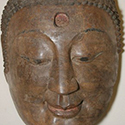
The Central Asian tradition of building such complexes was been practiced for centuries, primarily with Imperial sponsorship in the Northern regions, where Buddhism first took hold. The very act of creating these vast monuments, hollowed out from rock faces and decorated so lavishly within, was considered an act of 'piety' resulting in the accrual of merit, which in Buddhism is accumulated as a result of good deeds, acts or thoughts. This merit is then carried over to later in life or to a person's next birth. The sculptures and paintings also functioned as an important focus for worship and as symbolic links between the worldly and heavenly realms. People would have travelled great distances to see them and to worship and make offerings before them.
Go to Museum Resource: http://www.vam.ac.uk/content/articles/c/chinese-buddhist-cave-temple-sculpture/ | |
|
|
| The Buddhist Cave Temples of Xiangtangshan |
|
| New York University, Institute for the Study of the Ancient World
|
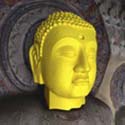
Carved into the side of a mountain, the Buddhist cave temples at Xiangtangshan (“Shahng-tahng-shahn”) are the crowning cultural achievement of the short-lived Northern Qi (“Chee”) dynasty, which ruled over most of northeastern China from 550 to 577 ce. The name Xiangtangshan translates as “Mountain of Echoing Halls,” and refers to two groups of rock-cut shrines in Hebei province close to ancient Ye, the Northern Qi capital. The emperors and courtiers who commissioned the temples were non-Chinese, of mixed ethnicities from north of the Great Wall, and practiced Buddhism, a religion favored by this elite. In their entirety, these cave temples housed an awe-inspiring world below ground and reflect a long tradition, begun in India, of situating holy places within the earth itself. Includes 12 over life-size sculptures from this Buddhist cave temple complex with a full-scale, digital, 3-D reconstruction of the interior of one of the site’s impressive caves.
Go to Museum Resource: http://isaw.nyu.edu/exhibitions/echoes | |
|
|
| Buddhist Sculpture from China |
|
| China Institute
|
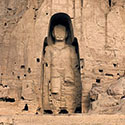
“The period covered by Buddhist Sculpture from China fits within Era 4 of the National History Standards, “Expanding Zones of Exchange and Encounter, 300-1000 CE”: Buddhist, Christian, and Hindu Traditions: Not only Islam but other major religions also spread widely during this 700-year era. Wherever these faiths were introduced, they carried with them a variety of cultural traditions, aesthetic ideas, and ways of organizing human endeavor. Each of them also embraced peoples of all classes and diverse languages in common worship and moral commitment….The entry of Buddhism into China and East Asia at the beginning of the Common Era is central to any perception of cultural exchange as playing “a crucial role in human history, being perhaps the most important external stimuli to change, leaving aside military conquest” (Curtin 1984: 1).”
Go to Museum Resource: https://china360online.org/?property=buddhist-sculpture-from-china | |
|
|
| Cai Guo-Qiang: I Want to Believe |
|
| Guggenheim Museum
|
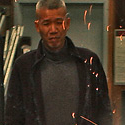
"Cai Guo-Qiang has literally exploded the accepted parameters of art making in our time. Drawing freely from ancient mythology, military history, Taoist cosmology, extraterrestrial observations, Maoist revolutionary tactics, Buddhist philosophy, gunpowder-related technology, Chinese medicine, and methods of terrorist violence, Cai’s art is a form of social energy, constantly mutable, linking what he refers to as 'the seen and unseen worlds.' This retrospective presents the full spectrum of the artist’s protean, multimedia art in all its conceptual complexity." With video documentation and an online exhibition of selected works. See also: Teaching Materials.
Go to Museum Resource: https://www.guggenheim.org/exhibition/cai-guo-qiang-i-want-to-believe-2 | |
|
|
| Cai Guo-Qiang on the Roof: Transparent Monument |
|
| The Metropolitan Museum of Art
|
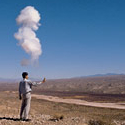
Online presentation of a 2006 installation at the Metropolitan Museum by the contemporary Chinese-born artist Cai Guo-Qiang, who is "known for his elaborate sculpture installations and gunpowder projects." With 7 images from the rooftop installation.
Go to Museum Resource: https://www.metmuseum.org/exhibitions/listings/2006/cai-guo-qiang | |
|
|
| Cai Guo-Qiang: "Traveler" |
|
| National Museum of Asian Art, Smithsonian Institution
|
Website documenting two site-specific installations at the Sackler Gallery and the Hirshhorn Museum created by the contemporary artist Cai Guo-Qiang (b. 1957), an artist who "integrates aspects of Eastern history into contemporary contexts." With photographs and descriptions of installations and the transcript from a 2004 interview with the artist. Uses Flash.
Go to Museum Resource: https://archive.asia.si.edu/exhibitions/online/cai/traveler.htm | |
|
|
| Calligraphy |
|
| University of Washington, Visual Sourcebook of Chinese Civilization
|
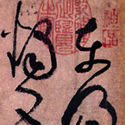
"This unit will cover calligraphy in China up through the Tang dynasty, with an emphasis on the Six Dynasties and Tang. It was during this period that calligraphy first began to flourish as an art form." A Visual Sourcebook of Chinese Civilization was prepared by University of Washington history professor Patricia Buckley Ebrey. With questions for discussion, timelines, maps, and suggested readings. Select HOME to find link to teachers' guides for all topics featured on the website.
Go to Museum Resource: http://depts.washington.edu/chinaciv/callig/callmain.htm | |
|
|
| Calligraphy in East Asia: Art, Communication, and Symbology |
|
| Education About Asia
|
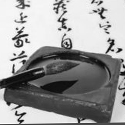
An ideal introductory overview of brush calligraphy’s powerful influence on East Asia. As an artistic genre, brush calligraphy holds a central place in the cultural history in East Asia. The form of the characters used in the Chinese writing system—as well as the other writing systems that were derived from it— have long held a place of special regard in the aesthetic traditions of the region. Brush calligraphy has historically been ubiquitous in the visual culture of China, Japan, and Korea, either as a complement to another kind of image (perhaps a landscape painting or part of an illustrated book) or as a work of art in its own right; consequently, it is central to the study of East Asian art history… East Asian brush calligraphy closely integrates aspects of art, communication, and symbology, thus offering educators a particularly rich set of resources from which to draw upon. With PDF download.
Go to Museum Resource: https://www.asianstudies.org/publications/eaa/archives/calligraphy-in-east-asia... | |
|
|
|
| Show All 319 Results (Text Only) |