|
|
| Show All 8 Results (Text Only) |
|
| China: Dawn of a Golden Age, 200–750 AD |
|
| The Metropolitan Museum of Art
|
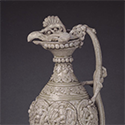
Publication of the exhibit that explores exceptional works of art from forty-six institutions in the People's Republic of China. Includes references to works of art in the Metropolitan's permanent collection, relevant literary references, maps, and details about how certain objects were crafted. See also exhibition publication.
Go to Museum Resource: https://www.metmuseum.org/exhibitions/listings/2004/china-dawn-of-a-golden-age | |
|
|
| Chinese Handscrolls |
|
| The Metropolitan Museum of Art
|
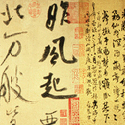
An overview of the Chinese handscroll format: "A significant difference between Eastern and Western painting lies in the format. Unlike Western paintings, which are hung on walls and continuously visible to the eye, most Chinese paintings are not meant to be on constant view but are brought out to be seen only from time to time. This occasional viewing has everything to do with format." With images of 18 paintings from the Tang, Song, Yuan, Ming, and Qing dynasties.
Go to Museum Resource: http://www.metmuseum.org/toah/hd/chhs/hd_chhs.htm | |
|
|
| Chinese Painting |
|
| The Metropolitan Museum of Art
|
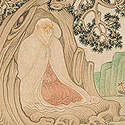
An introduction to Chinese painting: "This is the aim of the traditional Chinese painter: to capture not only the outer appearance of a subject but its inner essence as well—its energy, life force, spirit." With images of 19 paintings from the Tang, Song, Yuan, and Ming dynasties.
Go to Museum Resource: http://www.metmuseum.org/toah/hd/chin/hd_chin.htm | |
|
|
| Internationalism in the Tang Dynasty (618–906) |
|
| The Metropolitan Museum of Art
|
"Boldly syncretic, the arts of China's Tang dynasty (618–906) exhibit myriad international influences that were absorbed through diplomacy, conquest, trade, and pilgrimage. At the center of it all was Chang'an (present-day Xi'an), the most populous city in the world at the time, the seat of power for the Tang imperial court, and a pulsing hub of art, fashion, and culture." With 8 related artworks.
Go to Museum Resource: http://www.metmuseum.org/toah/hd/inte/hd_inte.htm | |
|
|
|
|
| Timeline of Art History: China, 500–1000 A.D. |
|
| The Metropolitan Museum of Art
|
"In the second half of the sixth century, China, long divided into north and south, is further subdivided into the northwestern and northeastern regions ruled by different factions of the once-powerful Northern Wei empire." With a period overview, list of key events, and 10 related artworks. Also has links to additional information about the Period of Northern and Southern Dynasties (386-589), the Tang dynasty (618-906), and the Northern Song dynasty (960-1127), an abridged list of Chinese emperors, and timelines of Japan and Korea during this time.
Go to Museum Resource: http://www.metmuseum.org/toah/ht/?period=06®ion=eac | |
|
|
| The Vibrant Role of Mingqi in Early Chinese Burials |
|
| The Metropolitan Museum of Art
|
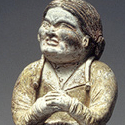
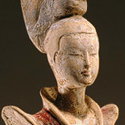
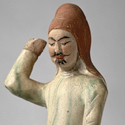
A brief history of the mingqi from the Han to the Tang dynasties: "Burial figurines of graceful dancers, mystical beasts, and everyday objects reveal both how people in early China approached death and how they lived. Since people viewed the afterlife as an extension of worldly life, these figurines, called mingqi or 'spirit utensils,' disclose details of routine existence and provide insights into belief systems over a thousand-year period." With 12 related objects.
Go to Museum Resource: http://www.metmuseum.org/toah/hd/mgqi/hd_mgqi.htm | |
|
|
|
| Show All 8 Results (Text Only) |