|
|
| Show All 9 Results (Text Only) |
|
| Buddhist Cave Temple Sculpture |
|
| Victoria and Albert Museum
|
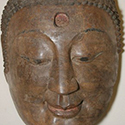
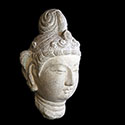
The Central Asian tradition of building such complexes was been practiced for centuries, primarily with Imperial sponsorship in the Northern regions, where Buddhism first took hold. The very act of creating these vast monuments, hollowed out from rock faces and decorated so lavishly within, was considered an act of 'piety' resulting in the accrual of merit, which in Buddhism is accumulated as a result of good deeds, acts or thoughts. This merit is then carried over to later in life or to a person's next birth. The sculptures and paintings also functioned as an important focus for worship and as symbolic links between the worldly and heavenly realms. People would have travelled great distances to see them and to worship and make offerings before them.
Go to Museum Resource: http://www.vam.ac.uk/content/articles/c/chinese-buddhist-cave-temple-sculpture/ | |
|
|
| Cave as Canvas: Hidden Images of Worship Along the Ancient Silk Routes |
|
| National Museum of Asian Art, Smithsonian Institution
|
Buddhist Cave Temples in Chinese Central Asia. Buddhism reached Chinese Central Asia (modern Xinjiang) from India around the first century A.D., brought by missionaries via the ancient Silk Routes. By the third century A.D., this new religion was flourishing in all the oasis kingdoms in the Tarim Basin (the Taklamakan Desert), also known as eastern Turkestan. As the Buddhist religion took hold and piety increased, the Indian tradition of excavating caves to serve as Buddhist sanctuaries proliferated in this region. In many of the Central Asian states, monasteries and temples were hewn out of the cliffs in secluded river valleys. With the patronage of local rulers, the elite, and wealthy merchants, these institutions gradually became major Buddhist centers. They continued to grow and prosper until the advent of Islam. Today, such Buddhist rock-cut cave complexes are some of the finest, if little known, monuments preserved in Chinese Central Asia.
Go to Museum Resource: https://archive.asia.si.edu/exhibitions/online/cave/default.htm | |
|
|
| China: Dawn of a Golden Age, 200–750 AD |
|
| The Metropolitan Museum of Art
|
Publication of the exhibit that explores exceptional works of art from forty-six institutions in the People's Republic of China. Includes references to works of art in the Metropolitan's permanent collection, relevant literary references, maps, and details about how certain objects were crafted. See also exhibition publication.
Go to Museum Resource: https://www.metmuseum.org/exhibitions/listings/2004/china-dawn-of-a-golden-age | |
|
|
| Gilded Splendor: Treasures of China's Liao Empire (907-1125) |
|
| Asia Society
|
This excellent interactive website explores the complex cultural and religious legacy of the Khitan and their reign over China during the Liao Dynasty (907-1125). Features an extensive image gallery of objects (organized into the following topics: 1) Nomadic Heritage; 2) Chinese Tomb Tradition; 3) Luxuries and Necessities; 4) Religious Life); an interactive tour of two Liao tombs; plus an interactive map of recently excavated Liao sites in Inner Mongolia (with images); two additional historic maps; and a timeline.
Go to Museum Resource: http://sites.asiasociety.org/arts/liao/ | |
|
|
| Iraq and China: Ceramics, Trade, and Innovation |
|
| National Museum of Asian Art, Smithsonian Institution
|
"Influenced by sea trade with China, Iraqi pottery was transformed in the 9th century. These innovations, in turn, inspired ceramic arts across the region." With two topics related to technique ("Blue & White" and "Luster") and one related to trade ("Spread of Innovation"); the latter discusses the dissemination of techniques to Iran, Turkey, Egypt, Italy, and England. Uses Flash.
Go to Museum Resource: https://archive.asia.si.edu/exhibitions/online/iraqChina/default.htm | |
|
|
| Sacred Texts: The Ashem Vohu |
|
| The British Library
|
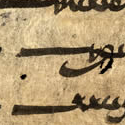
This is a "9th or 10th century Sogdian manuscript from Dunhuang, China," containing "a version of one of the holiest Zoroastrian prayers: the Ashem Vohu, composed originally in the Avestan (old Iranian) language." Featuring excellent high-resolution images of the manuscript, along with background information on the Songdians, Zoroastrianism in Central Asia, and the significance of this particular manuscript.
Go to Museum Resource: http://www.bl.uk/onlinegallery/sacredtexts/ashem.html | |
|
|
| Sacred Texts: The Diamond Sutra |
|
| The British Library
|
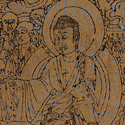
The British Library's copy of the Diamond Sutra, printed in China and dating to 868 CE, is the world's earliest dated, printed book. A central text of Indian Buddhism, the Diamond Sutra was first translated from Sanskrit into Chinese in about 400 CE. This webpage gives background information on Buddhism, sutras, and the significance of the Diamond Sutra. There is also a link to detailed information about this particular copy of the Sutra, as well as excellent images and even a "Turning Pages" feature that gives viewers a close-up look at the Sutra.
Go to Museum Resource: http://www.bl.uk/onlinegallery/sacredtexts/diamondsutra.html | |
|
|
| Tianlongshan Caves Project |
|
| Center for the Art of East Asia, University of Chicago
|
The Buddhist cave temples of Tianlongshan (Heavenly Dragon Mountain) are located in the mountains thirty-six kilometers southwest of Taiyuan city in the central part of Shanxi province. They exist today in a damaged state with so many of the sculptures now missing, that visitors to the caves cannot imagine how they looked in the past. Many of the sculptures from the caves are now in museums around the world. However, though the sculptures may be preserved and displayed, visitors to museums cannot understand them in their original historical, spatial, and religious contexts. For these reasons the Center for the Art of East Asia in the Department of Art History at the University of Chicago initiated the Tianlongshan Caves Project in 2013 to pursue research and digital imaging of the caves and their sculptures. The Project seeks to record and archive the sculptures and to compile data that can identify the fragments and their places of origin. In carrying this out, the Project aims to foster better understanding of the sculptural art, the history, and the meaning of the Tianlongshan Caves through creation of this website and through an exhibition of the results of the Project based on digital information.
Go to Museum Resource: https://tls.uchicago.edu/ | |
|
|
|
| Show All 9 Results (Text Only) |