|
|
| Show All 15 Results (Text Only) |
|
| The Astor Chinese Garden Court |
|
| The Metropolitan Museum of Art
|
A replica of a Ming dynasty home garden from Suzhou, China, recreated by artisans from China. The design of the museum's Chinese garden is "based on a small courtyard within a scholar's garden in the city of Suzhou, China, called Wang Shi Yuan, the Garden of the Master of the Fishing Nets.The first permanent cultural exchange between the U.S. and the People's Republic of China, the installation was completed in 1981. Conceived by museum trustee Brooke Astor, the courtyard was created and assembled by expert craftsmen from China using traditional methods, materials and hand tools." See photo gallery as well as lesson plan.
Go to Museum Resource: https://www.metmuseum.org/art/collection/search/78870 | |
|
|
| Chinese Calligraphy |
|
| The Metropolitan Museum of Art
|
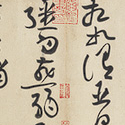
An overview of the development of calligraphy in China: "Calligraphy, or the art of writing, was the visual art form prized above all others in traditional China. The genres of painting and calligraphy emerged simultaneously, sharing identical tools—namely, brush and ink. Yet calligraphy was revered as a fine art long before painting; indeed, it was not until the Song dynasty, when painting became closely allied with calligraphy in aim, form, and technique, that painting shed its status as mere craft and joined the higher ranks of the fine arts. With images of 16 paintings from the Song, Ming, and Qing dynasties and two related objects.
Go to Museum Resource: http://www.metmuseum.org/toah/hd/chcl/hd_chcl.htm | |
|
|
|
| Chinese Handscrolls |
|
| The Metropolitan Museum of Art
|
An overview of the Chinese handscroll format: "A significant difference between Eastern and Western painting lies in the format. Unlike Western paintings, which are hung on walls and continuously visible to the eye, most Chinese paintings are not meant to be on constant view but are brought out to be seen only from time to time. This occasional viewing has everything to do with format." With images of 18 paintings from the Tang, Song, Yuan, Ming, and Qing dynasties.
Go to Museum Resource: http://www.metmuseum.org/toah/hd/chhs/hd_chhs.htm | |
|
|
| Chinese Painting |
|
| The Metropolitan Museum of Art
|
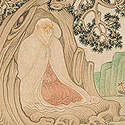
An introduction to Chinese painting: "This is the aim of the traditional Chinese painter: to capture not only the outer appearance of a subject but its inner essence as well—its energy, life force, spirit." With images of 19 paintings from the Tang, Song, Yuan, and Ming dynasties.
Go to Museum Resource: http://www.metmuseum.org/toah/hd/chin/hd_chin.htm | |
|
|
| Cultivated Landscapes: Reflections of Nature in Chinese Painting |
|
| The Metropolitan Museum of Art
|
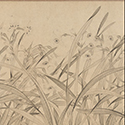
Online presentation of a 2002-2003 exhibition that encompasses "landscapes and garden scenes dating from the Five Dynasties period (907–960) to the late twentieth century" and explores the "manifold uses of natural imagery in Chinese painting as a reflection of human beliefs and emotions." With images of 8 related artworks. See also the exhibition publication.
Go to Museum Resource: https://www.metmuseum.org/exhibitions/listings/2002/cultivated-landscapes | |
|
|
| East and West: Chinese Export Porcelain |
|
| The Metropolitan Museum of Art
|
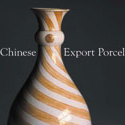
An introduction to Chinese export porcelain -- objects produced in China specifically for export to the West, beginning in the early 16th century. With 12 related artworks.
Go to Museum Resource: http://www.metmuseum.org/toah/hd/ewpor/hd_ewpor.htm | |
|
|
|
|
| Show All 15 Results (Text Only) |