|
|
| Show All 110 Results (Text Only) |
|
| The Asian Art Digital Teaching Project: Japan |
|
| Columbia University, Media Center for Art History
|
A module for "classroom presentation or student study" of two important scrolls from the Kamakura Period – Illustrated Legends of the Kitano Shrine (Kitano Tenjin Engi) and Illustrated Sutra of the Miracles of Kannon.
Go to Museum Resource: http://www.learn.columbia.edu/nehasian/html/neh_geo_con_japan.html | |
|
|
|
| Bu and Bun: The Arts of War and Peace |
|
| Asian Art Museum of San Francisco
|
In addition to superior strategic and military ability, most elite samurai were expected to be versed in the cultural arts. The warrior’s ideal balance of military and artistic skill is captured well in this description of the sixteenth century daimyo Hosokawa Yusai (1534–1610): “Renowned for his elegant pursuits, he is a complete man combining arts [bun] and arms [bu]. A man of nobility, a descendant of the sixth grandson of the emperor Seiwa, he was a ruler endowed with awesome dignity and inspiring decorum…He built a splendid castle, which was majestic, beautiful and high…He discussed Chinese poetic styles and recited by heart the secret teachings of Japanese poetry…" See also Archery Practice.
Go to Museum Resource: https://education.asianart.org/resources/bu-and-bun-the-arts-of-war-and-peace/ | |
|
|
| Chado: The Japanese Tea Ceremony |
|
| The Cleveland Museum of Art
|
This lesson introduces students to the Japanese tea ceremony to consider the art and the tradition of the tea ceremony and study the serving pieces used in the ceremony by participating in a tea ceremony. Students will learn the importance of the performance of tea ceremony through the history of how it became what it is today.
Go to Museum Resource: http://www.clevelandart.org/lesson-plan-packet/chado-japanese-tea-ceremony | |
|
|
|
| Chinese Calligraphy |
|
| The Metropolitan Museum of Art
|
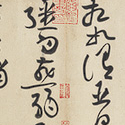
An overview of the development of calligraphy in China: "Calligraphy, or the art of writing, was the visual art form prized above all others in traditional China. The genres of painting and calligraphy emerged simultaneously, sharing identical tools—namely, brush and ink. Yet calligraphy was revered as a fine art long before painting; indeed, it was not until the Song dynasty, when painting became closely allied with calligraphy in aim, form, and technique, that painting shed its status as mere craft and joined the higher ranks of the fine arts. With images of 16 paintings from the Song, Ming, and Qing dynasties and two related objects.
Go to Museum Resource: http://www.metmuseum.org/toah/hd/chcl/hd_chcl.htm | |
|
|
| Chinese Cloisonné |
|
| The Metropolitan Museum of Art
|
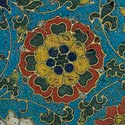
A brief introduction to the development of cloisonné in China during the early 14th to 15th century, as well as to the cloisonné technique. With 2 related artworks.
Go to Museum Resource: http://www.metmuseum.org/toah/hd/clos/hd_clos.htm | |
|
|
| Chinese Handscrolls |
|
| The Metropolitan Museum of Art
|
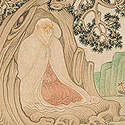
An overview of the Chinese handscroll format: "A significant difference between Eastern and Western painting lies in the format. Unlike Western paintings, which are hung on walls and continuously visible to the eye, most Chinese paintings are not meant to be on constant view but are brought out to be seen only from time to time. This occasional viewing has everything to do with format." With images of 18 paintings from the Tang, Song, Yuan, Ming, and Qing dynasties.
Go to Museum Resource: http://www.metmuseum.org/toah/hd/chhs/hd_chhs.htm | |
|
|
|
| Show All 110 Results (Text Only) |