|
|
| Show All 110 Results (Text Only) |
|
| Chinese Landscape Painting During the Song Dynasty |
|
| Princeton University Art Museum
|
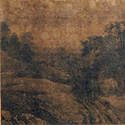
“Landscape painting dominated Chinese painting beginning in the tenth century. The word for landscape painting in Chinese, shan shui hua, literally means “mountain (shan) water (shui) painting (hua).” Mountains are hard and unyielding; water is soft and fluid. These opposites are an example of the concept of yin and yang—the idea that everything in nature is composed of complementary but opposing forces that interact and change. Complementary opposites is one of several core cultural concepts of the Song dynasty that are encapsulated in many of the period’s landscape paintings.”
Go to Museum Resource: https://artmuseum.princeton.edu/asian-art/china/resources/landscape-painting/ | |
|
|
| Chinese Painting |
|
| The Metropolitan Museum of Art
|
An introduction to Chinese painting: "This is the aim of the traditional Chinese painter: to capture not only the outer appearance of a subject but its inner essence as well—its energy, life force, spirit." With images of 19 paintings from the Tang, Song, Yuan, and Ming dynasties.
Go to Museum Resource: http://www.metmuseum.org/toah/hd/chin/hd_chin.htm | |
|
|
| Chinese Rubbings Collection of the Field Museum |
|
| Ackland Art Museum, University of North Carolina at Chapel Hill
|
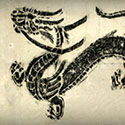
For more than 1,500 years rubbings have been a vital medium for preserving China's art, culture, and history. These beautiful works are made by pressing thin sheets of wet paper into carvings or inscriptions cut in stone or other hard materials and carefully inking the surface to create a copy of the original. The resulting rubbing has white impressions where the paper was pressed into the carving surrounded by a typically black ink field. Because they are easily transported, rubbings quickly became the primary means to faithfully reproduce and share historical data, poetry, scholastic texts, calligraphy, and art throughout China.
Go to Museum Resource: https://www.fieldmuseum.org/node/4986 | |
|
|
| Choson Dynasty, 1392-1910 |
|
| Minneapolis Institute of Arts
|
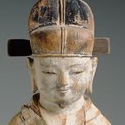
"The rulers of the Yi, or Choson, dynasty (1392-1910) adopted Confucianism as their governing ideology and withdrew official support for Buddhism." A brief one-paragraph overview, with four objects representative of the period.
Go to Museum Resource: http://archive.artsmia.org/art-of-asia/history/korea-choson-dynasty.cfm | |
|
|
| Courtship and Calligraphy in “The Tale of Genji” |
|
| The Cleveland Museum of Art
|
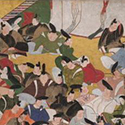
The purpose of this lesson is to discover through an examination of The Tale of Genji and other Japanese literature, the importance of calligraphy to courtship rituals in the Japanese court culture of the late Heian period (794-1185).
Go to Museum Resource: http://www.clevelandart.org/lesson-plan-packet/courtship-and-calligraphy-tale-g... | |
|
|
| Cultivated Landscapes: Reflections of Nature in Chinese Painting |
|
| The Metropolitan Museum of Art
|
Online presentation of a 2002-2003 exhibition that encompasses "landscapes and garden scenes dating from the Five Dynasties period (907–960) to the late twentieth century" and explores the "manifold uses of natural imagery in Chinese painting as a reflection of human beliefs and emotions." With images of 8 related artworks. See also the exhibition publication.
Go to Museum Resource: https://www.metmuseum.org/exhibitions/listings/2002/cultivated-landscapes | |
|
|
|
| The Development of Landscape Painting in China: The Song through the Ming Dynasties |
|
| Asian Art Museum of San Francisco
|
Invasions in the north by the Jin Tartars in the 12th century forced the Song dynasty to retreat to the south where a new court was established at Hangzhou in 1127. Under the Emperor Hui Zong the Imperial Painting Academy already was moving in the direction of closer views of nature, both in landscapes and in images of birds, flowers, and insects. The intent was to capture the vital life spirit of these subjects as well as an understanding of their true form, texture, and movement in space. See also Ming Dynasty (1368–1644) Education and Tradition.
Go to Museum Resource: https://education.asianart.org/resources/the-development-of-landscape-painting-... | |
|
|
|
| Show All 110 Results (Text Only) |