|
|
| Show All 110 Results (Text Only) |
|
| International Dunhuang Project: Silk Road Exhibition |
|
| The British Library
|
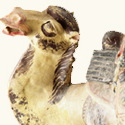
An extensive image archive featuring manuscripts, paintings, textiles, sculptures, murals, coins, and other artifacts from six Silk Road excavation sites: 1) Samarkand; 2) Khotan; 3) Kroraina; 4) Miran; 5) Dunhang; 6) Gaochang. Excellent descriptive text with most objects. Also includes maps, site diagrams, and some photographs.
Go to Museum Resource: http://idp.bl.uk/education/silk_road/index.a4d | |
|
|
| The International Dunhuang Project: The Silk Road Online |
|
| The British Library
|
The International Dunhuang Project is "a ground-breaking international collaboration to make information and images of all manuscripts, paintings, textiles and artefacts from Dunhuang and archaeological sites of the Eastern Silk Road freely available on the Internet and to encourage their use through educational and research programs." A truly comprehensive resource for teaching about the Silk Road; see especially the education section for pages on various topics, including Buddhism on the Silk Road, medicine on the Silk Road, and cultural dialogue on the Silk Road.
Go to Museum Resource: http://idp.bl.uk/idp.a4d | |
|
|
| An Introduction to Japanese Buddhism |
|
| Asian Art Museum of San Francisco
|
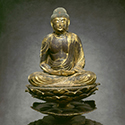
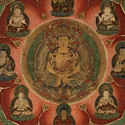
Buddhism was officially transmitted to Japan in 525, when the monarch of the Korean kingdom of Baekje sent a mission to Japan with gifts, including an image of the Buddha, several ritual objects, and sacred texts. Buddhism’s journey from India to China, Korea, and Japan had taken about a thousand years. See also An Introduction to Japanese Buddhism video with Professor Robert Sharf, University of California, Berkeley, discusses Japanese Buddhism at the Medieval Japan Teacher Institute at the Asian Art Museum.
Go to Museum Resource: https://education.asianart.org/resources/an-introduction-to-buddhism-in-japan/ | |
|
|
| The Invention of Woodblock Printing in the Tang (618–906) and Song (960–1279) Dynasties |
|
| Asian Art Museum of San Francisco
|
Among the most globally significant innovations of the Tang and Song dynasties were the inventions of woodblock printing and moveable type, enabling widespread publishing of a variety of texts, and the dissemination of knowledge and literacy.
Go to Museum Resource: https://education.asianart.org/resources/the-invention-of-woodblock-printing-in... | |
|
|
| Iraq and China: Ceramics, Trade, and Innovation |
|
| National Museum of Asian Art, Smithsonian Institution
|
"Influenced by sea trade with China, Iraqi pottery was transformed in the 9th century. These innovations, in turn, inspired ceramic arts across the region." With two topics related to technique ("Blue & White" and "Luster") and one related to trade ("Spread of Innovation"); the latter discusses the dissemination of techniques to Iran, Turkey, Egypt, Italy, and England. Uses Flash.
Go to Museum Resource: https://archive.asia.si.edu/exhibitions/online/iraqChina/default.htm | |
|
|
| Islamic Art of the Deccan |
|
| The Metropolitan Museum of Art
|
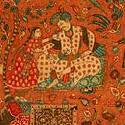
"The "Deccan" (derived from Dakshina) is a geographical term that refers to the plateau in south central India still ruled by Hindu kings when the first Muslim sultanates of India were established in Delhi." This essay discusses the cultural and political developments in the Deccan region during the rule of the Bahmanids (1347-1528). With 11 images of related artwork and architecture.
Go to Museum Resource: http://www.metmuseum.org/toah/hd/decc/hd_decc.htm | |
|
|
|
| Joseon Buncheong Ware: Between Celadon and Porcelain |
|
| The Metropolitan Museum of Art
|
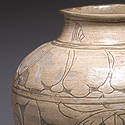
A discussion of buncheong ware, "the striking ceramic type produced during the first 200 years of the Joseon dynasty (1392–1910)." With six related artworks.
Go to Museum Resource: http://www.metmuseum.org/toah/hd/pnch/hd_pnch.htm | |
|
|
|
| Show All 110 Results (Text Only) |